Systematic Review and Meta-Analysis: Build Real Research Skills is an excellent starting point for undergraduate and master’s students seeking practical research experience beyond classroom learning (apply). Systematic review and meta-analysis have become important approaches in evidence-based research, allowing researchers to bring findings from multiple studies together in a structured way. Developing an understanding of these methods can strengthen students’ abilities in literature searching, critical analysis, evidence synthesis, research methodology, and scientific writing.
What Makes Systematic Review and Meta-Analysis Valuable?
Every research question begins with understanding what is already known. However, when hundreds of studies exist on a particular topic, identifying and interpreting the most relevant evidence can become challenging.
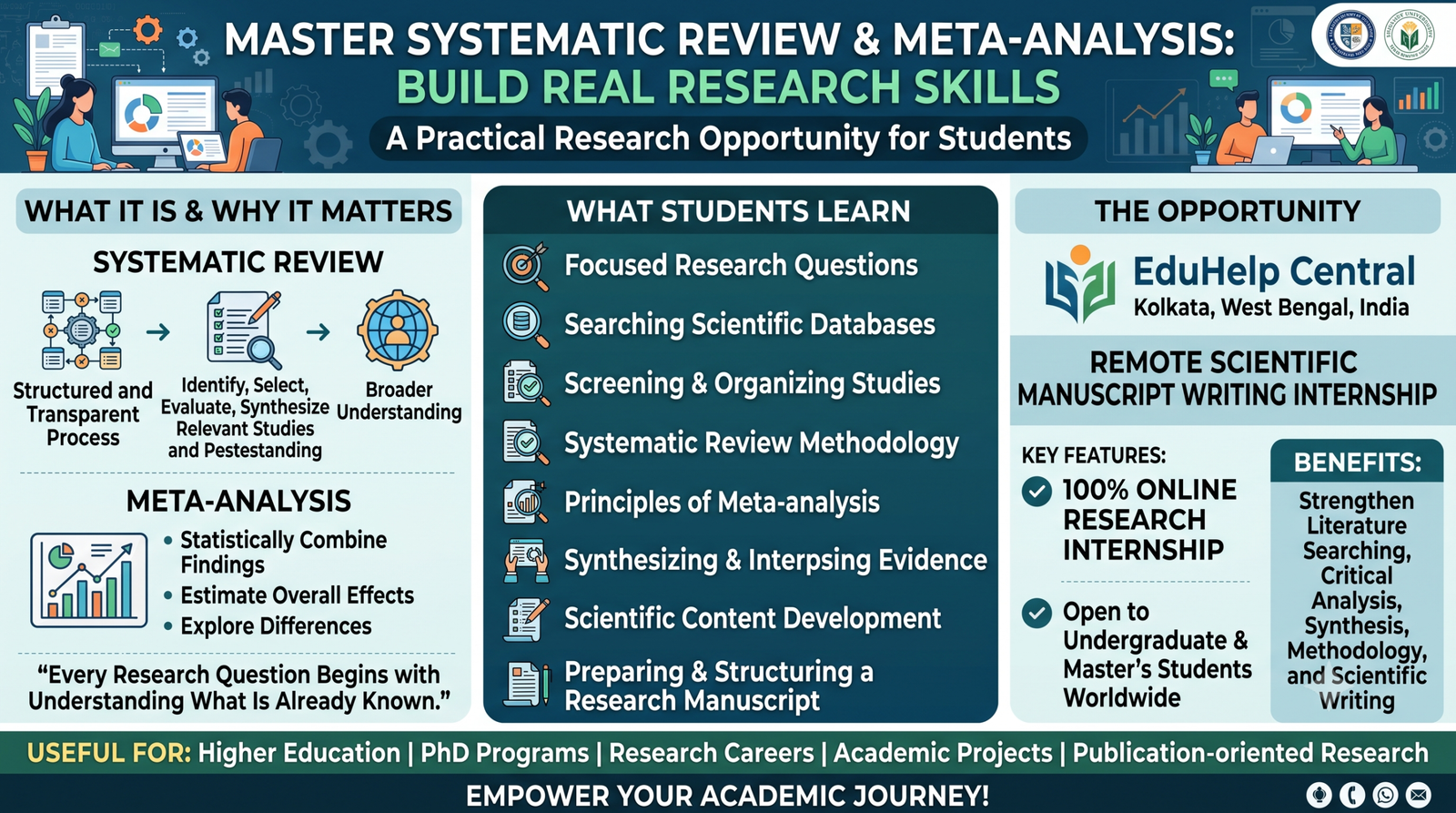
A systematic review uses a structured and transparent process to identify, select, evaluate, and synthesize relevant research studies. It allows researchers to look beyond individual papers and develop a broader understanding of the available evidence.
A meta-analysis, when appropriate data are available, can statistically combine findings from multiple studies. This can help researchers estimate overall effects and explore differences between study results.
Together, these methods form an important part of evidence-based research.
What Can Students Learn?
For students, the real value lies in learning how these methods are applied to an actual research project. A structured learning experience can introduce participants to the journey from a research question to a scientific manuscript.
Key areas may include:
- Developing focused research questions
- Searching scientific databases and literature
- Screening and organizing relevant studies
- Understanding systematic review methodology
- Learning the principles of meta-analysis
- Synthesizing and interpreting research evidence
- Developing scientific content
- Preparing and structuring a research manuscript
These skills can be useful for students considering higher education, PhD programs, research careers, academic projects, or publication-oriented research.
A Practical Research Opportunity for Students
The Remote Scientific Manuscript Writing Internship, organized by EduHelp Central practical exposure to this area of research.
100% Online Research Internship (apply)
Students do not need to relocate to participate. The internship is conducted 100% online and is open to undergraduate and master’s students from around the world.
Internship Details
| Feature | Details |
| Program | Remote Scientific Manuscript Writing Internship |
| Organizer | EduHelp Central |
| Location | Kolkata, West Bengal, India |
| Duration | 3 months |
| Period | October–December |
| Participants | Undergraduate and Master’s students |
| Mode | 100% Online (apply) |
| Eligibility | Worldwide |
| Focus | Systematic Review, Meta-Analysis & Scientific Writing |
| Certificate | Internship/Completion Certificate upon fulfilling requirements |
| Course Fee | USD 40 |
| Payment | After a successful interview and selection |
Why Gain Research Experience Early?
Academic qualifications provide theoretical knowledge, but practical research experience can help students understand how research actually works. Learning to evaluate scientific evidence, collaborate with other researchers, and contribute to manuscript preparation can build confidence for future academic projects. For students seeking an online systematic review internship, a meta-analysis internship, a research internship, or a scientific writing opportunity, structured experience can be a valuable addition to their academic journey.
Conclusion
The Remote Scientific Manuscript Writing Internship by EduHelp Central offers undergraduate and master’s students an opportunity to develop these skills through supervised, collaborative, and fully online research activities.
Interested in building practical research experience? Apply for the internship and begin your journey into systematic review, meta-analysis, and scientific manuscript development.